





The probability that the Fed will be on hold longer than expected and perhaps ease later in 2019 is rising. An accommodative Fed is an important ingredient for a sustained bull market in stocks, a healthy environment for corporate spreads, and increases the probability that the dollar weakens. We believe a weaker dollar would reduce the strain on Emerging Markets (EM) currencies, EM markets, and increase the probability that recent EM outperformance is sustained. Here’s why a weaker dollar may be upon us:
Tuesday’s CPI release confirmed that inflation pressures as measured by CPI are easing. Yesterday’s Producer Price Index release, also weaker than expected, confirmed the deceleration. As the first chart shows, year-over-year CPI is now in a downtrend. The Fed wants inflation securely over 2% and it’s going in the wrong direction. Fighting inflation is easier for a central bank than fighting deflation, so the Fed will not want the downtrend in CPI Year over Year (YOY) to continue. We believe this means the Fed has little choice but to remain dovish. The weaker than expected jobs report last week gives the Fed cover for this policy inaction.
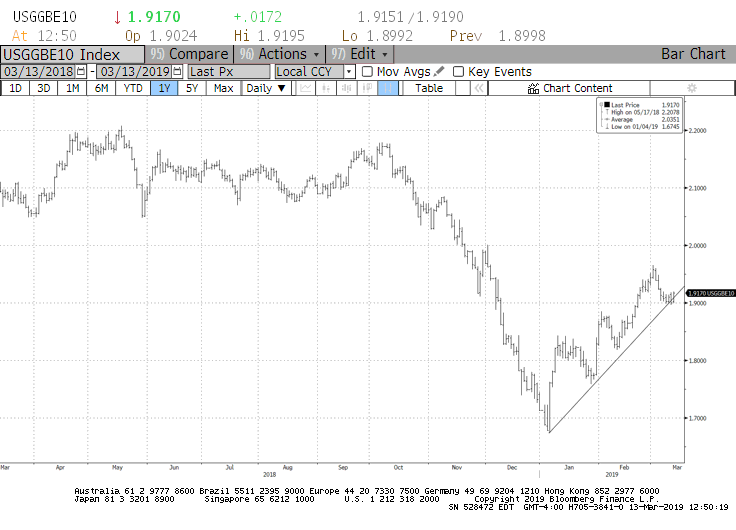
So far, the bond market’s expectation of future inflation, as measured by the 10-year TIPS break-even (B/E) inflation rate. remains in an uptrend. Yet, as the second chart shows, that uptrend is weakening. The TIPS B/E rate is threatening to break the uptrend that began at the start of 2019. If this uptrend is broken, it would not be a surprise to see more Fed discussions about the pause being prolonged. It would also be reasonable for market pricing to begin to discount an easing.
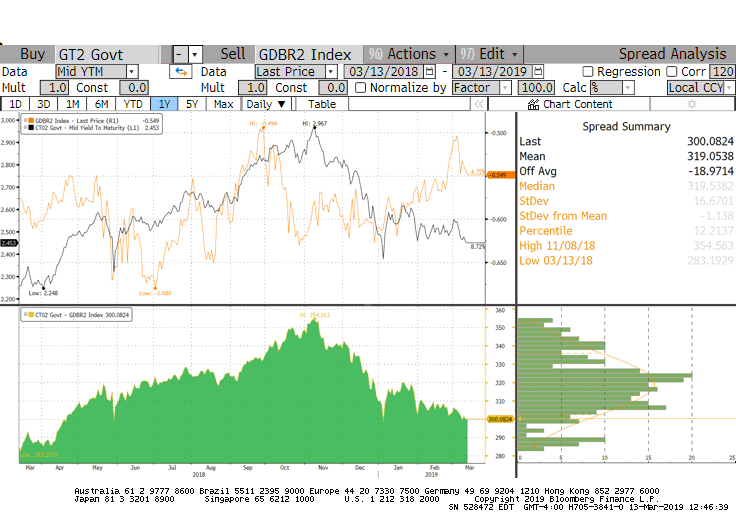
Despite the volatility in markets and crisis of varying kinds in the Eurozone and the UK, the US dollar has been unable to break out of its trading range and make a new high. Fed policy is why this dollar rally is probably over. A dovish Fed takes away an important part of the bull case for the dollar – namely, that the Fed is tightening and other Central Banks are still accommodative. Now that the Fed has joined the accommodative club, the case for a big dollar rally from this point forward is much weaker. Interest rate differentials have shifted away from the dollar as well. As the third chart shows, the spread between short term Treasuries and short term German bonds has contracted significantly since their peak several months ago. This is a function of reduced expectations for Fed tightening.
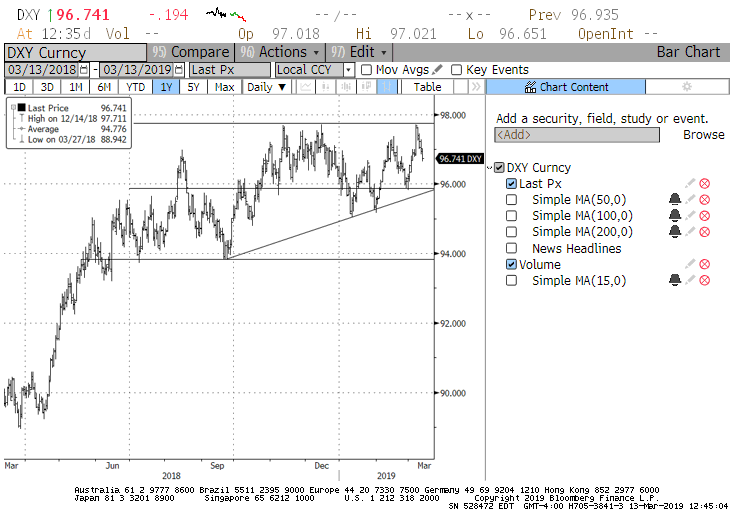
As a result, we see in the fourth chart that the dollar has failed to break out of its trading range, as referenced before. Especially important, this chart highlights a technical pattern called “distribution”. When a financial instrument is in a trading range, and more of the transactions are in the top half of the trading range, “distribution” is likely occurring. This increases the probability that the uptrend in the dollar (represented by the US Dollar Index) in place since the fall is likely to be broken, and the bottom of the range tested in the near to intermediate future.
We believe a weaker dollar would be positive for EM, commodity related investments, and foreign currency investments generally.
CPI YoY

Source: Bloomberg, accessed 3/13/19
10-Year TIPS Breakevens
Source: Bloomberg, accessed 3/13/19
Spread Between 2 Year Treasuries and 2 Year German Bonds
Source: Bloomberg, accessed 3/13/19
DXY US Dollar Index
Source: Bloomberg, accessed 3/13/19
Jonathan E. Lewis
Chief Investment Officer
Index Definitions The Consumer Price Index (CPI) measures the change in the price of goods and services from the perspective of the consumer. It is a key way to measure changes in purchasing trends and inflation. The U.S. Dollar Index (USDX, DXY, DX) is an index (or measure) of the value of the United States dollar relative to a basket of foreign currencies, often referred to as a basket of U.S. trade partners’ currencies.




Global Asset Allocation Team Market Update – January 2026
Financial markets generated some mixed results in December as fears around lofty valuations saw the AI trade fizzle towards year end – while investors were also contemplating the path for global monetary policy as the synchronized easing cycle winds down.
Learn more Global Asset Allocation Team Market Update – January 2026